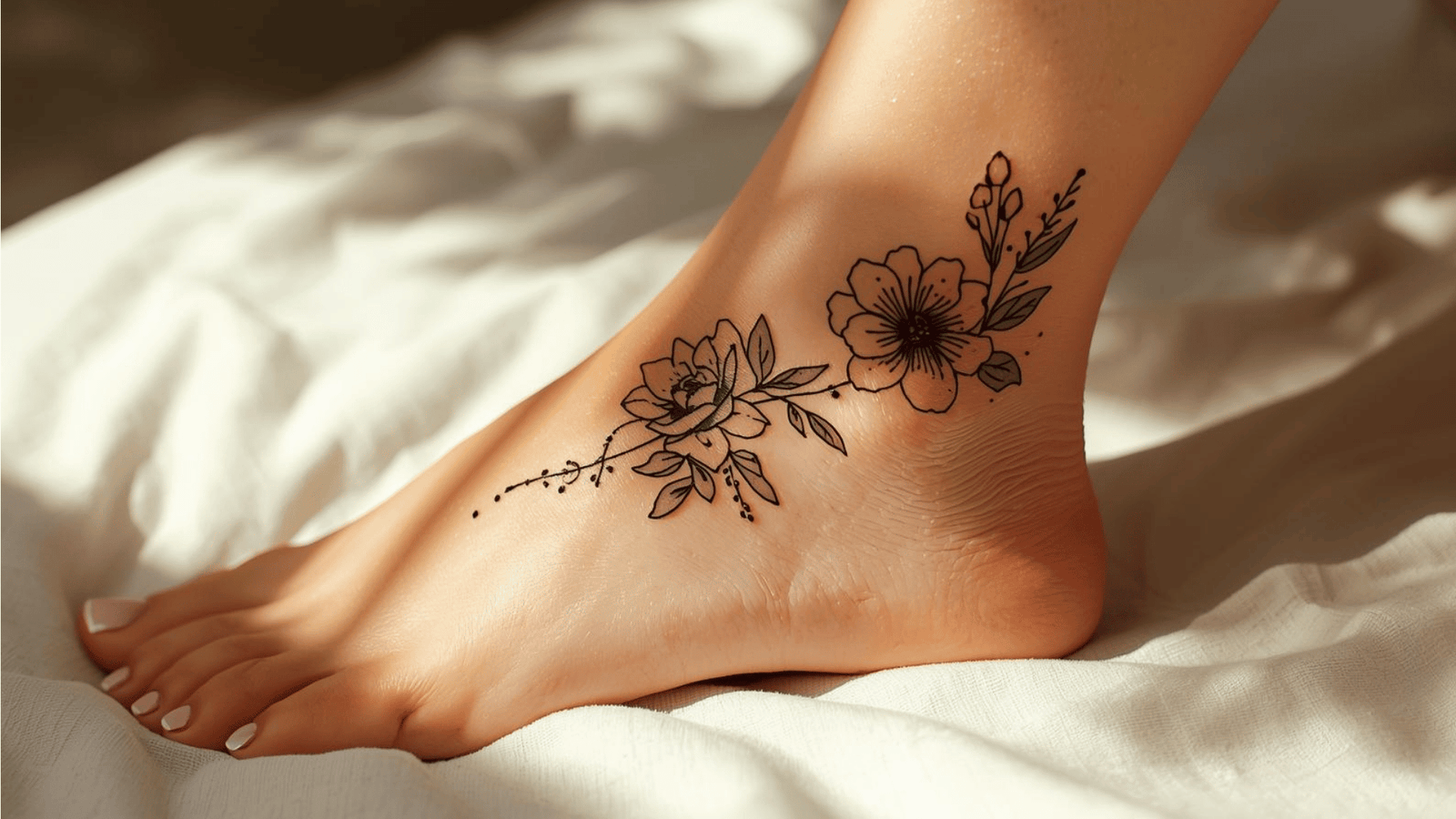
Blackdot’s Automated Tattooing System: Tech Revolution
In the evolving world of body art, Blackdot Studio emerges as a pioneer with its automated tattooing system. This Austin-based innovation applies ink with machine precision, promising accuracy that surpasses human capabilities.
The system uses a device that deposits tiny black dots to form intricate designs, adapting to individual skin characteristics for optimal results. By blending technology with artistic expression, Blackdot aims to make tattoos more accessible, less painful, and open to a broader range of creators. This approach challenges traditional tattooing norms, sparking debates on whether it complements or disrupts the industry.
The core of Blackdot’s system lies in its patented device, which treats skin as a dynamic canvas. Unlike conventional tattoo guns that rely on artist skill to control depth and pressure, Blackdot’s machine employs advanced algorithms and sensors.
It begins with concealed test dots to analyze skin properties, such as elasticity and thickness, drawing from a vast database to calibrate puncture depth and ink deposition. Each dot measures approximately 250 microns in diameter—roughly the width of two human hairs—allowing for hyper-detailed grayscale images in a stippling technique reminiscent of pointillism in painting.
This precision minimizes errors like blowouts, where ink spreads unevenly under the skin, and reduces pain by targeting the epidermis-dermis junction, an area with fewer nerve endings.
Blackdot’s process integrates hardware and software seamlessly. Designs are uploaded to a cloud platform, converted into dot patterns, and executed strip by strip. The device features patented mapping and motion systems that ensure consistency across various body parts and skin types.
For instance, it can render ultra-sharp lettering, hyper-realistic portraits, or generative art created via algorithms. This scalability extends to permanent makeup studios and retail settings like salons, potentially broadening tattoo applications beyond traditional parlors.
To visualize the workflow, consider this flowchart depicting the automated tattooing process:
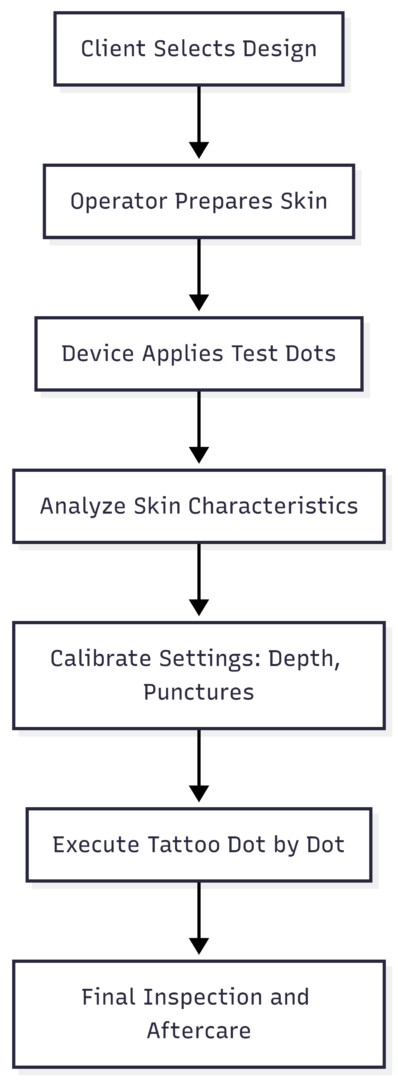
This diagram illustrates the step-by-step automation, highlighting how data-driven adjustments replace manual intuition.
Specifications of the Blackdot device underscore its engineering focus. The system supports designs up to credit card size for microtattoos, with a wide grayscale range for shading. Dot density enables intricate details previously challenging for human artists, such as fine lines thinner than standard needles. The machine’s adaptability to skin variations—factoring in factors like age, tone, and location—ensures uniform ink placement, potentially enhancing tattoo longevity by avoiding over-penetration. However, while early examples show sharpness, long-term fading remains a concern for such minute details.
Pricing reflects the premium nature of this technology. Design fees range from $400 to $8,000, depending on complexity and artist involvement, while execution fees are between $600 and $1,850. Total costs can reach $10,000 for elaborate pieces, positioning Blackdot as a luxury option rather than mass-market. Here’s a breakdown in table form:
| Component | Fee Range | Description |
|---|---|---|
| Design Fee | $400 – $8,000 | Covers artwork creation or licensing from artists |
| Execution Fee | $600 – $1,850 | Includes machine application and studio session |
| Total Cost | $1,000 – $10,000 | Varies by design intricacy and size |
This structure allows clients to invest in unique, machine-perfect tattoos, but the high barrier may limit accessibility.
Blackdot’s vision extends beyond machinery to empower artists. The company positions its system as a tool that democratizes tattoo application, enabling creators from diverse fields—painters, graphic designers, even coders—to translate their work onto skin without mastering traditional techniques.
For example, generative artist Tyler Hobbs collaborates with Blackdot to apply algorithm-based designs, expanding artistic possibilities. Traditional tattoo artists like Omer Tunca and collage expert John Craig also partner, benefiting from royalties each time their designs are inked.
The Blackdot Gallery serves as a digital marketplace where artists upload works for licensing. Becoming a Blackdot Certified Artist (BCA) grants access to global clients, with limited-edition collections and earnings from sales.
This model fosters “Tradable Tattoos,” akin to digital collectibles, where designs can be traded among artists or claimed by enthusiasts, potentially creating a secondary market similar to NFTs without blockchain hype. Artists can operate remotely, delivering tattoos to clients worldwide via Blackdot’s expanding studios, breaking geographical barriers.
For clients, benefits include reduced pain—claimed to be substantially less than traditional methods—and predictable outcomes. The automation eliminates human error, ensuring designs match visions exactly.
This appeals to novices hesitant about pain or subpar results, potentially tapping into an untapped market of 40 million Americans interested in tattoos but deterred by traditional hurdles. Moreover, the system’s speed and safety could integrate with other body modification services, like piercing shops.
Examples of Blackdot tattoos showcase this precision. Intricate pieces, such as a miniaturized Mona Lisa or circuit-like brain diagrams, demonstrate the device’s ability to capture fine details.
These visuals highlight the stippled, high-resolution aesthetic unique to machine application.
Despite innovations, Blackdot faces significant backlash. Critics argue the steep prices make it impractical for average clients, confining it to a niche luxury segment. More pressing is the longevity issue: microtattoos with extreme detail risk blurring as skin ages and ink disperses, turning crisp images into indistinct blobs over years.
The famous Mona Lisa example has drawn scrutiny, with artists warning of inevitable fading due to the body’s natural processes. While some early tattoos remain sharp, their youth limits conclusive data on long-term durability.
Industry impact raises alarms. Many tattoo artists view automation as a threat, fearing it devalues hands-on craftsmanship and could displace jobs. By enabling non-tattoo artists to “ink” via machines, Blackdot might flood the market with designs, pitting creators against each other in a race to the bottom.
Videos and forums discuss potential “downfall” scenarios, where monopolies emerge, and independent artists struggle. Critics liken it to platform economies that extract value from laborers, potentially eroding the artist-client relationship central to tattoo culture.
Proponents counter that technology has always integrated into tattooing—from rotary machines to digital tools—and Blackdot offers royalties and new opportunities. Local artists like Donny Mann see potential revenue streams, suggesting coexistence rather than replacement.
Looking ahead, Blackdot plans expansion beyond Austin, seeking investors to open more studios and refine the system. The global tattoo market, valued at $1.6 billion in the US and projected to hit $3.9 billion worldwide by 2030 with 9.9% annual growth, presents ample opportunity.
As AI and automation advance, machine tattooing could become mainstream, especially for precision-demanding styles. However, adoption hinges on addressing costs, proving longevity, and gaining community trust.
In comparison to traditional methods, Blackdot offers advantages in consistency and accessibility but lacks the personal touch many cherish. A table comparing key aspects:
| Aspect | Traditional Tattooing | Blackdot Automated System |
|---|---|---|
| Precision | Dependent on artist skill | Machine-calibrated, minimal errors |
| Pain Level | Moderate to high | Minimal, targeted deposition |
| Cost | $100-$1,000 average | $1,000-$10,000 |
| Design Flexibility | Limited by hand steadiness | High, supports generative art |
| Longevity | Proven over decades | Uncertain for micro details |
| Artist Involvement | Direct, hands-on | Remote via licensing |
This highlights trade-offs, aiding informed decisions.
Ultimately, Blackdot’s system represents a bold step in tattoo evolution, merging tech with tradition. While challenges persist, its potential to expand the art form—making it safer, more precise, and inclusive—could reshape the industry.
For enthusiasts seeking innovation, Blackdot offers a glimpse into tattooing’s future, where machines and humans collaborate for enduring body art. As the conversation continues, the balance between automation and artistry will define its legacy.
Please share this Exploring Blackdot Tattoo: Tech Revolution or Passing Fad? with your friends and do a comment below about your feedback.
We will meet you on next article.
Until you can read, Side Tattoos Women 4K HD Designs