What Tattoo Trends Will Be Taking Over
Tattoo culture doesn’t stand still. Every year, new styles bubble up through studios, social feeds, and celebrity skin—and by the time a trend reaches mainstream awareness, skilled artists are already pivoting to the next thing. Heading into 2026, the industry is in an interesting moment: hyper-specific niches are going mainstream, old styles are being rediscovered by new generations, and technology is quietly reshaping how tattoos get designed before a needle ever touches skin.
Whether you’re planning your first tattoo, adding to a growing collection, or an artist trying to stay ahead of client requests, here’s a comprehensive breakdown of the styles, techniques, and placements defining the current era.
The Dominant Styles
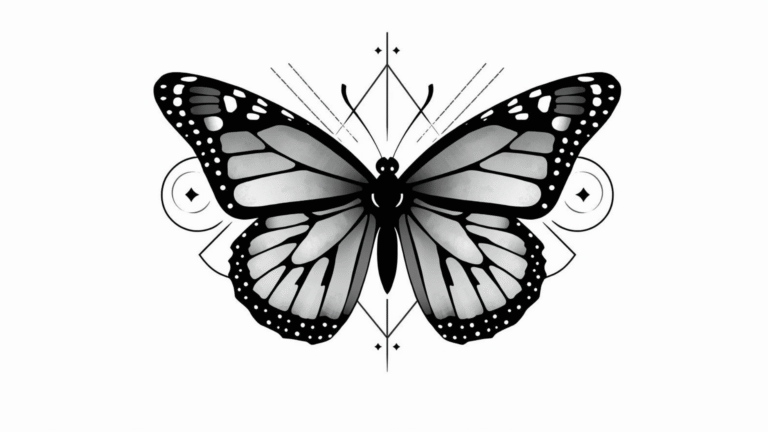
Fine Line and Minimalism
Fine line tattooing has been climbing for years, and it hasn’t peaked. If anything, 2026 is the year it becomes the default aesthetic expectation for a wide swath of clients—particularly first-timers, younger clients, and anyone who spends time on tattoo-forward corners of social media.
The appeal is straightforward: these designs are delicate, personal, and work beautifully in placements that interact with anatomy. Collarbones, fingers, wrists, and ribs are all ideal canvases. Floral motifs, script, ornamental patterns, and micro portraits are the most requested subjects.
What many clients don’t realize is that fine line work is technically demanding. A single needle or fine needle configuration leaves no room for imprecision. The line either lands clean or it doesn’t. Artists who specialize in this style are showcasing a level of control that takes years to develop, and clients are beginning to recognize and pay for that quality.
For artists, the opportunity here is real. Fine line saturates certain markets, but placement-specific fine line—designing work that genuinely complements body contours rather than just sitting on top of skin—remains a differentiator.
Sticker-Style Tattoos
One of the clearest signals that tattoo culture is shifting toward modular, mix-and-match body art is the explosion of sticker-style tattooing. These are bold-outlined, often colorful, playful pieces placed on the skin with a slightly chaotic intentionality—as if someone pressed a sheet of stickers onto their arm and committed.
The defining characteristics:
| Feature | Description |
|---|---|
| Outline | Bold, clean, deliberate |
| Imagery | Playful, graphic, often pop-culture adjacent |
| Placement | Scattered, non-traditional, fills gaps between other pieces |
| Aesthetic | Looks “removable” even though it isn’t |
What makes this trend sticky (unavoidable pun) is that it suits the way younger clients approach collecting tattoos. Rather than planning a full sleeve with a unified theme, they build over time—adding pieces that coexist without demanding cohesion. Each tattoo is its own thing. Together they become a vibe.
Cyber Sigilism
Cyber sigilism is the most visually distinctive Gen Z-driven trend in the current cycle. Rooted in Y2K aesthetics and internet subculture, these tattoos feature sharp, thin, often abstract linework that looks like it belongs somewhere between ancient symbols and a sci-fi interface.
The designs are angular, swirling, web-like—sometimes resembling circuitry, sometimes something more occult. They sit most naturally on forearms, shoulders, and the chest, where they interact with the body’s natural lines.
This trend is worth understanding even if it’s not your personal aesthetic, because it’s attracting a specific client demographic—late teens to mid-twenties, digital-native, style-conscious—who will be getting tattooed for decades. Artists who can execute cyber sigilism well now are building relationships with clients who will return for different styles as their tastes mature.
Hyper-Realism and AI-Assisted Design
Realism has always been the benchmark for technical skill in tattooing. The ability to render a portrait, animal, or object with photographic fidelity—at scale, on skin, with ink that behaves differently than paint—is genuinely difficult. What’s changed is the integration of AI tools into the design phase.
Artists are using AI to generate reference composites, explore lighting options on 3D body models, and push detail concepts further than traditional sketching allows. The tattoo itself is still human work. The preparation is increasingly augmented.
Microrealism—hyper-detailed work at small scale—continues to push boundaries. Tiny portraits, intricate animals, and miniature objects on wrists and fingers now carry detail that would have been impossible a decade ago. Artists like Oscar Åkermo, Balazs Bercsenyi, and Dr. Woo have defined the aesthetic ceiling for this style, and other artists are working toward it.
Blackwork
Blackwork has moved from a niche preference to a mainstream staple. The appeal is its clarity: high contrast, negative space used deliberately, and designs that read from across a room. Geometric patterns, ornamental layouts, and bold full-saturation pieces all fall under this umbrella.
What makes blackwork particularly durable as a trend is its versatility. It scales from a subtle wrist accent to a full back piece without losing its character. It photographs cleanly. It ages predictably. And it pairs naturally with fine line work, creating contrast when the two styles are used together on the same body.
American Traditional and Neo Traditional
American traditional tattoos never actually dipped in popularity—they just cycled out of trend conversation for a while. Bold outlines, limited color palettes, and classic motifs (eagles, roses, daggers, anchors) are now being rediscovered by younger clients who appreciate their durability and visual clarity.
Neo traditional takes those foundations and expands the palette, adds illustrative depth, and incorporates more complex subject matter. The structure stays. The rigidity loosens. Artists like Valerie Vargas have pushed this style into genuinely painterly territory while keeping the bold, legible quality that makes traditional work photograph and age well.
Key Placement Trends
Placement has become as deliberate as the design itself. The current trend is toward tattoos that work with anatomy rather than simply occupying space on skin.
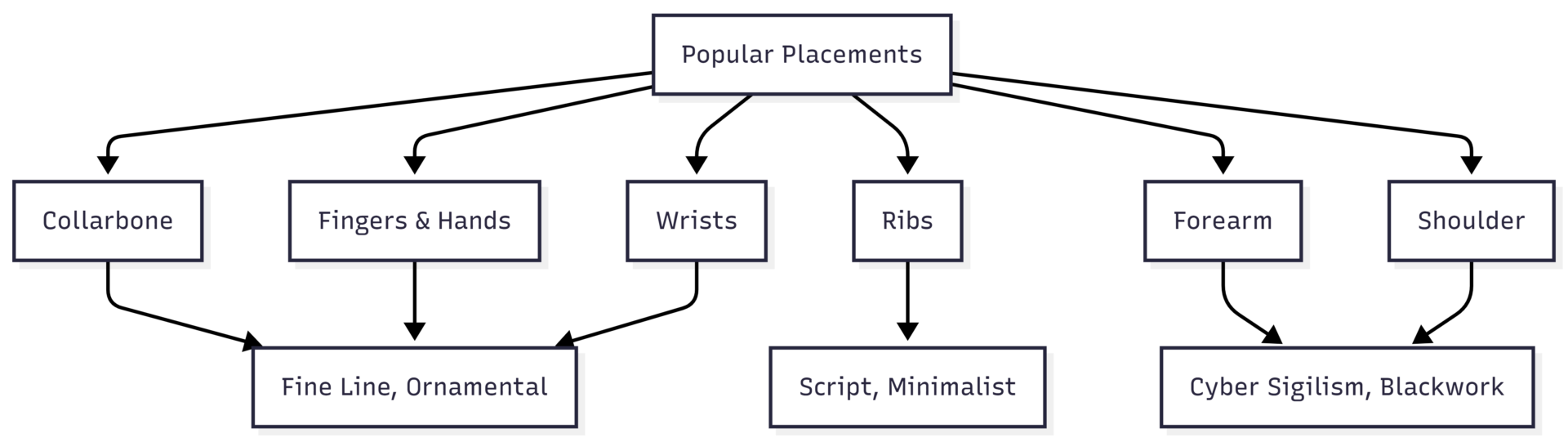
Lower back tattoos are also returning—genuinely, not ironically. Recontextualized with modern design sensibilities (intricate linework, botanical motifs, abstract shapes), they shed the early-2000s stigma and are being requested by clients across age groups.
Technique Developments
Beyond style, the technical side of tattooing is evolving in ways that affect both quality and client experience.
White ink highlights are increasingly used to add dimension—simulating light catching on eyes in portrait work, creating a glow effect in dark designs, or rendering a scar-like raised quality. The technique requires precise layering and isn’t universally appropriate for all skin tones, but in the right hands it significantly expands what’s achievable in realism and blackwork.
AI-assisted design tools are genuinely changing preparation workflows. Clients who once came in with a vague concept now arrive with AI-generated reference images—sometimes useful, sometimes a liability if expectations are set by images that aren’t actually achievable in ink. Artists who understand these tools can redirect client expectations productively and use the better outputs as genuine starting points.
Styles With Lasting Power vs. Trends That Fade
Not every trend has equal longevity. Understanding the difference helps both clients make better decisions and artists build portfolios that compound in value over time.
| Style | Trend Longevity | Key Strength |
|---|---|---|
| Fine Line / Minimalism | High | Broad appeal, clean aging |
| American Traditional | Evergreen | Durability, consistent client base |
| Realism / Microrealism | Evergreen | High skill signal, premium pricing |
| Neo Traditional | High | Expanding palette, strong artistry signal |
| Blackwork | High | Versatile, ages predictably |
| Sticker-Style | Medium | Strong with Gen Z, may evolve quickly |
| Cyber Sigilism | Medium | Niche-specific, generationally tied |
| White Ink / Invisible | Low–Medium | Niche appeal, fading issues over time |
For artists, the calculus is fairly clear: mastering Traditional and Realism provides a floor of consistent work regardless of what’s trending. Staying fluent in current styles like fine line and sticker-style brings in trend-driven clients who are actively looking right now.
What These Trends Say About Tattooing’s Direction
The through-line across every major trend in 2026 is intentionality. Clients are thinking more carefully before they commit. They’re researching artists specifically rather than walking into the nearest shop. They’re asking for tattoos that fit their existing collection rather than standalone pieces.
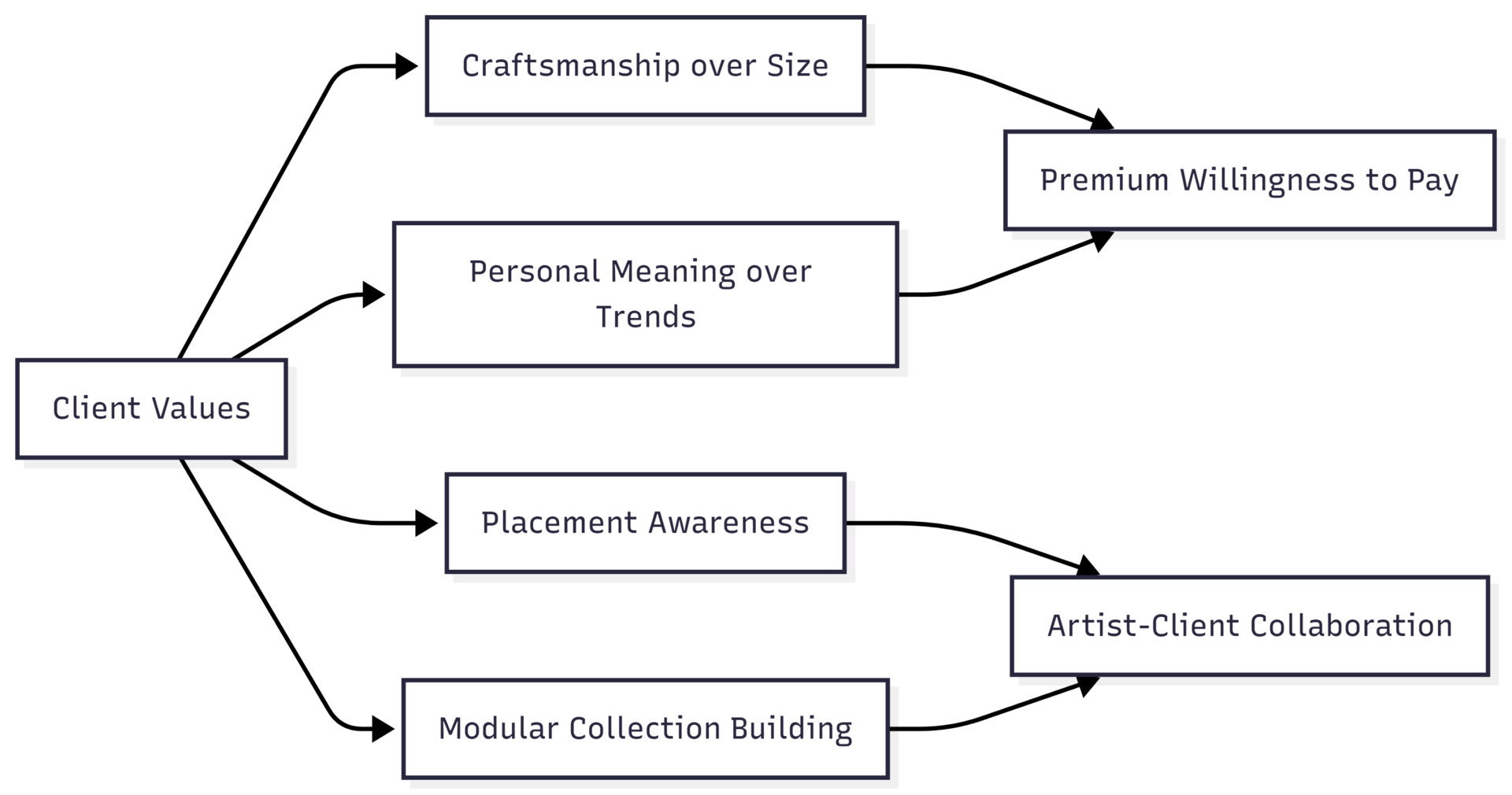
This shift benefits artists who invest in their skills and develop a recognizable aesthetic. The clients who are thinking carefully about placement, design, and longevity are also the clients who will pay premium rates, refer other clients, and return for future work.
The tattoo industry has always rewarded craft. What 2026 adds is a client base that increasingly understands what craft looks like—and is willing to wait for an appointment with the artist who has it.
Practical Takeaways
For clients:
- Research artists whose existing portfolios match the style you want—don’t assume every artist can execute every style equally well
- Think about placement before design; a tattoo that works with your anatomy will look better for longer
- Build a collection with loose visual cohesion rather than chasing individual trends—the overall effect will be more satisfying
- White ink and invisible tattoos fade faster than darker work; factor that into long-term expectations
For artists:
- Fine line mastery is currently one of the highest-demand skills in most markets
- Posting sticker-style and cyber sigilism work on social media can drive significant traffic from younger clients even if it’s not your primary specialty
- Realism and Traditional remain the most recession-proof specializations—clients seeking these styles book based on skill, not trend
- AI design tools are a client expectation management challenge as much as a creative opportunity; developing fluency helps you navigate both sides
The trends taking over in 2026 aren’t random. They reflect where clients are mentally—more deliberate, more visually literate, more invested in the long-term relationship between their body and the art on it. Styles that respect that intelligence will keep growing. Styles that don’t will fade out as quickly as they arrived.
Please share this What Tattoo Trends Will Be Taking Over with your friends and do a comment below about your feedback.
We will meet you on next article.
Until you can read, Does tattoo ink give you cancer?