10 Reasons Why People Get Tattooed
Tattoos have shifted from cultural taboo to mainstream art form. Today, roughly 38% of adults between 18 and 29 have at least one tattoo, and the numbers keep rising. But what actually drives someone to sit through hours of needle work and commit to permanent ink? The motivations are more layered than most people assume. Here are the 10 core reasons people get tattooed — backed by psychology, culture, and lived experience.
1. Self-Expression
The most cited reason people get tattooed is simply to communicate who they are without words. Tattoos serve as a visual language — conveying personality, values, passions, and worldview at a glance.
Dr. Joseph Pierre, a professor at UCLA, notes that tattoos offer two unique expressive functions: they involve showing skin (historically discouraged, especially for women), and they allow people to make statements about themselves without speaking. Art has done this for millennia; tattoos bring that tradition onto the body itself.
People use tattoos to signal everything from musical taste and spiritual beliefs to political views and cultural heritage. Unlike clothing or accessories, tattoos can’t be removed at the end of the day — making the statement more committed and meaningful.
2. Commemoration and Memorial
One of the most emotionally powerful reasons to get tattooed is to honor someone or something. Memorial tattoos — portraits of a lost parent, a pet’s paw print, a loved one’s handwriting — allow people to carry their grief and love visibly.
As one study participant put it: “I got it to keep my mother’s memory.” These tattoos transform loss into something permanent and beautiful. Common memorial approaches include portraits, significant dates, meaningful quotes, or even replicating a tattoo the deceased person had.
Beyond death, people also commemorate milestones: the birth of a child, surviving illness, finishing a long journey. The tattoo becomes a permanent timestamp on the body.
3. Personal Meaning and Life Lessons
Closely related to commemoration, many tattoos encode private meaning — a reminder of who someone used to be, or who they’re trying to become. Inspirational quotes, symbolic imagery, song lyrics, and meaningful objects all serve this function.
The body essentially becomes a journal. As one tattooed respondent in a University of the Free State study put it: “My body is a book, my tattoos is my story.”
Clients often choose imagery tied to specific periods of growth or difficulty — so they can look back and see how far they’ve come. Tattoos in this context serve as personal monuments to change.
4. Emotional Healing and Trauma Recovery
Research increasingly supports tattoos as tools for psychological recovery. Professor Verin Swami at Anglia Ruskin University found that people’s feelings of bodily anxiety decrease immediately after getting a tattoo and remain lower weeks later. Tattooing, he argues, helps people feel closer to their own bodies.
For survivors of domestic abuse or sexual trauma, tattoos can represent reclaiming ownership of their body. A tattoo placed over a scar — physical or emotional — reframes the body from site of damage to site of strength.
Tattoo artists like David Allen specialize in covering mastectomy scars with floral designs, turning surgical marks into artwork. Similarly, researchers have found that cancer patients use tattoos as part of emotional recovery and regaining a sense of bodily control.
There’s also a physiological component: getting a tattoo triggers the release of endorphins and adrenaline, which can create a euphoric or calming sensation — one reason some people find the process genuinely therapeutic.
5. Body Image and Confidence
Tattoos alter how people see themselves. For many, this is the whole point. Body modifications allow people to present themselves in a way that feels more authentic or aligned with their inner identity.
Swami’s research found that tattooed individuals report more positive feelings about their bodies overall. The act of deliberately decorating the skin — choosing what goes on it and where — gives people a sense of agency over their appearance that can be deeply affirming.
This is especially true for people who’ve felt disconnected from or uncomfortable in their bodies. A tattoo can shift that relationship. Rather than a body that happened to them, it becomes a body they’ve shaped.
6. Art and Aesthetic Appreciation
Not every tattoo carries a deep story. Some people simply love art and want to wear it.
The tattoo industry has evolved dramatically in technical quality and artistic range. Styles now include photorealism, watercolor, geometric abstraction, Japanese traditional, blackwork, illustrative, and more. For art lovers, the body is a canvas — and working with a skilled tattoo artist is a genuine creative collaboration.
Some clients get tattooed in the style of historical artists they admire. Others collect work from specific tattooers whose aesthetic they love, building a cohesive collection over years. The motivation here is aesthetic pleasure and creative engagement, not symbolism.
7. Fashion and Cultural Identity
Since at least the 1970s, fashion designers have drawn inspiration from tattoo aesthetics. Today, tattoos function much like clothing — they communicate style, taste, and belonging.
In some cultural contexts, specific tattoo styles carry ethnic or regional identity: Polynesian tribal patterns, Japanese irezumi, Māori tā moko. Getting these tattoos can be a way to honor ancestry or demonstrate cultural pride. Within subcultures — punk, metal, skateboarding, biker communities — tattoos serve as visual markers of membership.
More broadly, tattoos have entered mainstream fashion as accessories. Like hairstyle or jewelry, they contribute to a person’s overall aesthetic presentation, and many people choose designs primarily because they think they look good.
8. Belonging and Social Connection
Tattoos build community. This happens at two levels.
First, shared tattoos or styles signal group membership — from gang markings and military insignia to matching friend tattoos and partner tattoos. The tattoo becomes a symbol of shared identity and loyalty.
Second, the culture around tattooing itself creates connection. People with tattoos often enjoy discussing them, and visible ink is a reliable conversation starter. Tattoo studios, conventions, and online communities bring enthusiasts together. For many, collecting tattoos is a social activity as much as an individual one.
Peer influence also plays a measurable role, particularly among younger people. When friends and social circles are heavily tattooed, others are more likely to get tattooed themselves.
9. Challenging Social Norms
Throughout history, tattoos have been used to push back against mainstream expectations about the body. For some people, that’s still the point.
Body art — tattoos, piercing, scarification — has long served as a form of rebellion. Getting tattooed in visible or unconventional places, choosing designs that challenge propriety, or simply embracing a heavily tattooed body in a conservative context can be a deliberate act of resistance.
Psychologists have found that tattooed people are not significantly more impulsive or aggressive than non-tattooed people — which challenges the persistent cultural stereotype. The stigma around tattoos has diminished substantially, but for some people, the act of getting tattooed is still partly defined by that friction with convention.
10. The Experience Itself
For a significant number of people, the draw isn’t just the finished tattoo — it’s the process of getting one.
The ritual of choosing a design, finding the right artist, sitting through the session, and emerging with something new is genuinely appealing. The endorphin rush from the physical sensation, the one-on-one time with a skilled artist, the sense of accomplishment after completing a large or painful piece — all of this contributes to tattooing’s addictive quality for many enthusiasts.
Some people are drawn specifically to enduring the pain as a marker of resilience. Historically, surviving tattooing was used across cultures to mark warriors or coming-of-age rites. That psychological dimension hasn’t disappeared. For some, the difficulty is part of the meaning.
What Stops People From Getting Tattooed?
Understanding why people don’t get tattoos provides useful context. Research from the University of the Free State found the main barriers are:
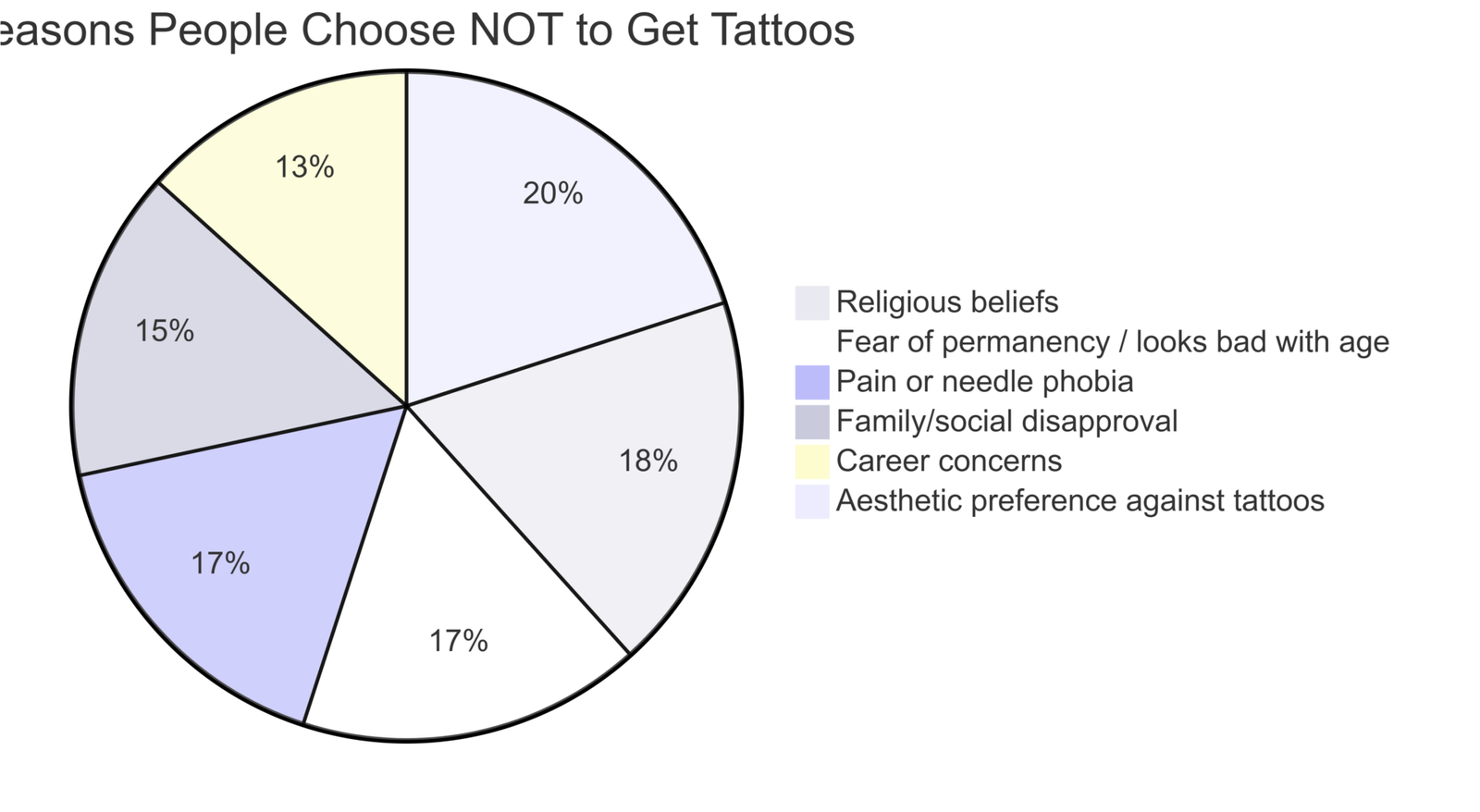
Despite these hesitations, 47% of non-tattooed participants in that same study were considering getting a tattoo — suggesting the threshold is shifting.
Summary: Why People Get Tattooed
| Reason | Core Motivation |
|---|---|
| Self-expression | Communicate identity without words |
| Commemoration | Honor people, events, or milestones |
| Personal meaning | Encode private stories and lessons |
| Emotional healing | Recover from trauma, reclaim the body |
| Body image | Improve confidence and bodily connection |
| Art appreciation | Wear skilled artwork permanently |
| Fashion and culture | Signal style, ethnicity, or subculture |
| Belonging | Join communities, share identity |
| Rebellion | Challenge social norms and expectations |
| The experience | Enjoy the ritual, pain, and process |
Choosing to Get Tattooed
If you’re considering a tattoo, the motivation matters less than the execution. A few practical considerations:
Research artists thoroughly and review their portfolios before booking. Good tattoo work is not cheap, and price-shopping for permanent body art is a false economy. Placement matters for both aesthetics and professional considerations — tattoos that can’t be covered during work hours may affect employment in some fields. Large pieces often require multiple sessions. Plan accordingly.
The stigma that once surrounded tattoos has largely eroded. Most employers have moved toward acceptance, and the conversation has shifted from whether tattoos are acceptable to what they mean. In that context, the more interesting question isn’t why so many people get tattoos — it’s what story they’re choosing to tell.
Please share this 10 Reasons Why People Get Tattooed with your friends and do a comment below about your feedback.
We will meet you on next article.
Until you can read, How to Become a Tattoo Artist Without an Apprenticeship